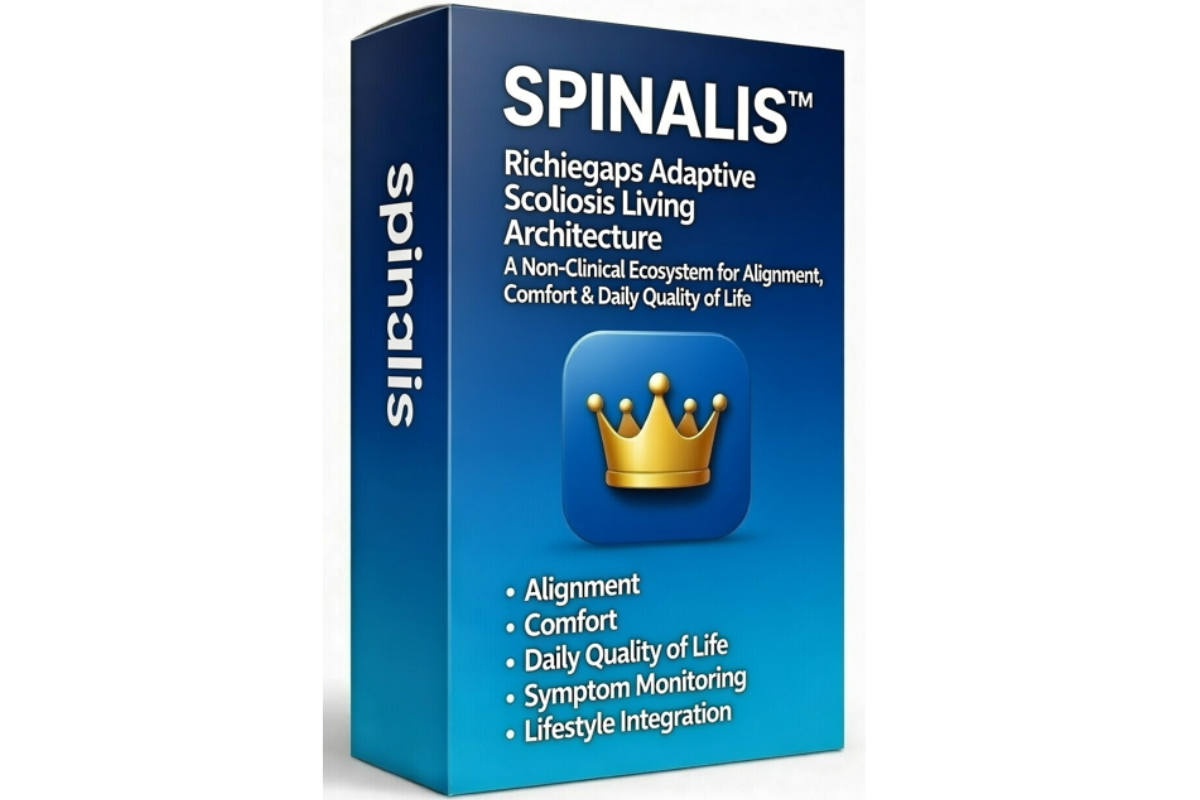
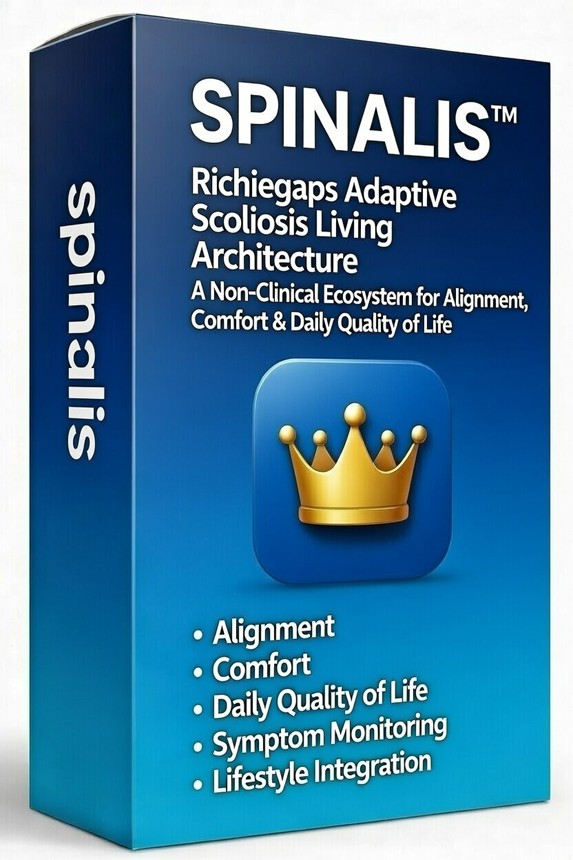
A Non-Clinical Ecosystem for Alignment, Comfort & Daily Quality of LifeCreator: Richiegaps
Nature: Non-clinical support & lifestyle architecture
Focus: Alignment awareness • Comfort • Confidence • Daily rhythm
Explicit Boundary:SPINALIS is not a cure.
Not a diagnosis.
Not a medical treatment.
Not a replacement for orthopedic or surgical care.Executive Vision
Scoliosis is often treated as a measurement problem—angles, curves, degrees.
But for the human living with it, scoliosis is experienced as:
discomfort
fatigue
asymmetry awareness
posture anxiety
self-image challenges
long days between appointments
SPINALIS exists for those days.
It does not try to “straighten the spine.”
It helps the person live well inside the body they have today.
Core Philosophy (Ethos)Support alignment, not perfection.
Enable comfort, not correction.
Respect the body’s story.
SPINALIS is built on acceptance with intelligent support.
What SPINALIS Is — and Is NotSPINALIS is:
a daily comfort and alignment-awareness ecosystem
a posture-confidence and fatigue-reduction companion
a lifestyle rhythm guide for people with scoliosis
a dignity-first support architecture
SPINALIS is not:
a corrective therapy
a substitute for braces, physiotherapy, or surgery
a diagnostic or monitoring device
a medical claims system
Architecture Overview — The Alignment LatticeSPINALIS works as a living, adaptive lattice, responding to daily posture load, fatigue, and emotional state.Layer 1 — Body Resonance Mapping (Gentle Entry)Purpose: Understand how the spine feels, not how it measures.
Inputs (optional, human-friendly):
daily discomfort zones
fatigue levels
sitting / standing duration
emotional tone (confidence, frustration, calm)
environment (chair type, mattress, workspace)
Output:
An Alignment Resonance Map highlighting:
stress zones
comfort anchors
recovery windows
No angles. No medical interpretation.
Layer 2 — Adaptive Posture Awareness (Non-Corrective)
SPINALIS does not force posture.
It supports awareness and relief.
Supports include:
gentle posture reminders (timing-based, not constant)
asymmetry-respecting sitting cues
micro-break pacing
fatigue-aware rest signals
Goal: Reduce unconscious strain and tension.
Layer 3 — Biomechanical Lifestyle Flow
Movement is framed as ease, not exercise.
SPINALIS may support:
scoliosis-friendly stretching awareness
side-balanced movement flows
breath-spine synchronization
low-load mobility routines
Always:
optional
comfort-first
aligned with clinician guidance
Layer 4 — Environmental Alignment Support
The environment often worsens scoliosis discomfort.
SPINALIS supports awareness of:
chair height and softness
desk and screen positioning
sleep surface comfort
backpack or load balance
This is architectural awareness, not therapy.
Layer 5 — Emotional & Identity Support
Scoliosis often affects confidence before function.
SPINALIS helps with:
body acceptance
social confidence
clothing comfort strategies
anxiety around appearance or posture
No body shaming.
No correction narratives.
Layer 6 — Family, School & Workplace Harmony
Especially important for:
adolescents
students
desk-based professionals
SPINALIS supports:
caregiver understanding
school/work accommodation awareness
pacing of daily demands
dignity-first conversations
Technology Use (Optional & Ethical)
If AI is used:
personalization of reminders
fatigue-aware pacing
tone sensitivity
Never used for:
diagnosis, curvature tracking, or treatment decisions.
Who SPINALIS Is For
adolescents with scoliosis
adults with idiopathic or degenerative scoliosis
families and caregivers
schools and universities
corporate ergonomics & wellness programs
Why Richiegaps Is Suited for This
SPINALIS requires:
biomechanical understanding
architectural thinking
psychological sensitivity
restraint from medical overreach
human-first design
Richiegaps operates across systems, not silos—designing support architectures that respect medicine while addressing life outside clinics.
He builds, then steps back.
Exclusive Rights & FeesExclusive Global Custodianship License — SPINALIS™USD 15–22 Million (One-Time)Includes:
full SPINALIS architecture
exclusive deployment rights (defined scope & geography)
deep customization
ethics & governance framework
founding custodian status
right to scale responsibly (schools, hospitals, corporates)
No recurring fees.
No medical liability.
No data monetization.
Best-Fit Exclusive Clients
Final Truth
SPINALIS is not about fixing the spine.
It is about supporting the human who lives in it.
Comfort is not weakness.
Alignment is not perfection.
Support is intelligent compassion, designed.

 A Non-Clinical Ecosystem for Alignment, Comfort & Daily Quality of Life
Creator: Richiegaps
Nature: Non-clinical support & lifestyle architecture
Focus: Alignment awareness • Comfort • Confidence • Daily rhythm
Explicit Boundary:
SPINALIS is not a cure.
Not a diagnosis.
Not a medical treatment.
Not a replacement for orthopedic or surgical care.
Executive Vision
Scoliosis is often treated as a measurement problem—angles, curves, degrees.
But for the human living with it, scoliosis is experienced as: